The BTM Energy Gap: Why Australia’s Data Center Boom Demands a Smarter Control Layer
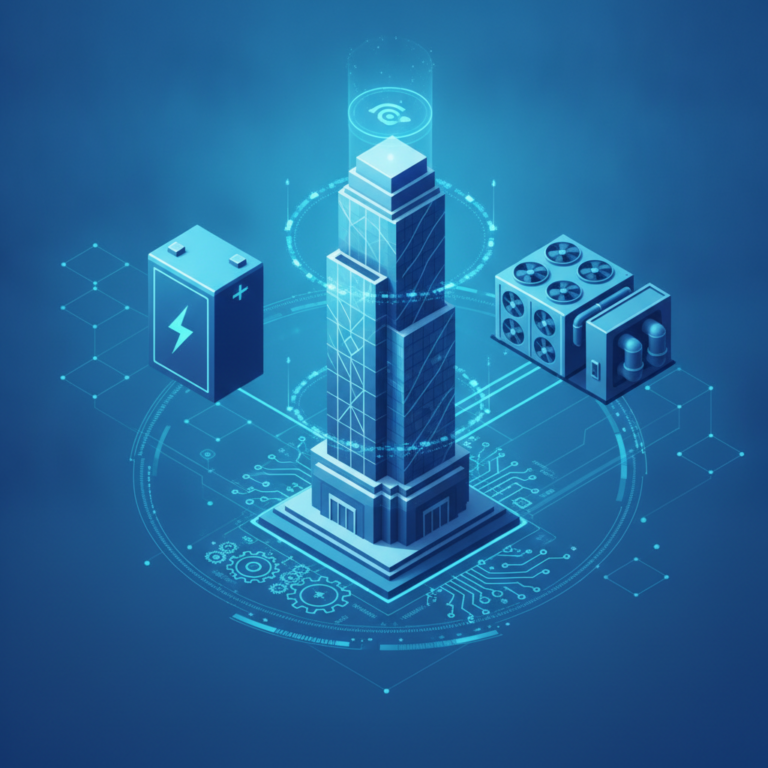
Australian data centers are currently in the midst of an unprecedented hyperscale build cycle. With massive campuses from AirTrunk, NextDC, and Vantage entering the market, the sheer volume of capital and concrete being deployed is staggering. Facilities are being equipped with world-class hardware: sophisticated Battery Energy Storage Systems (BESS), hybrid microgrids, and massive solar PV arrays.
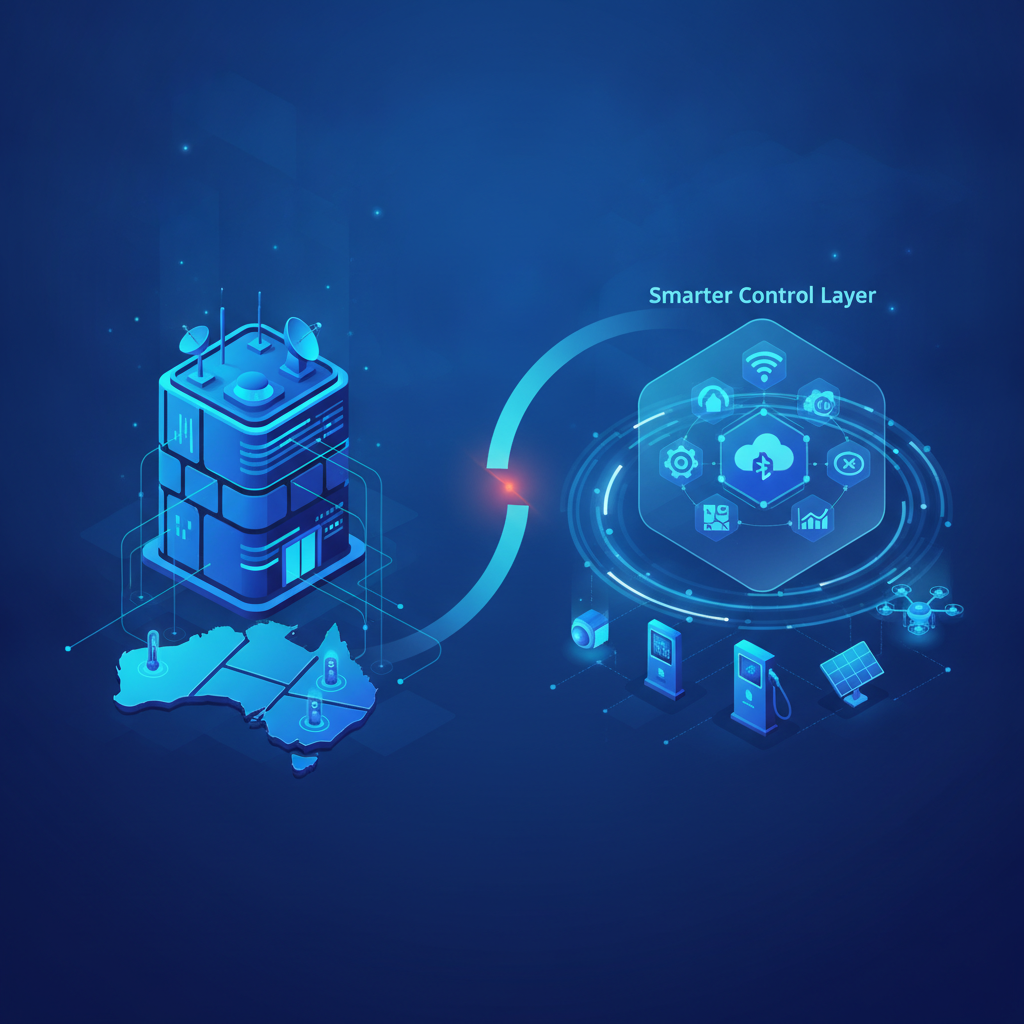
Yet, amidst this hardware arms race, a critical vulnerability is being overlooked: the Behind-the-Meter (BTM) energy gap. The problem is no longer acquiring the physical infrastructure; it is what happens after that hardware is commissioned. Operating these massive facilities at the scale and reliability modern AI demands requires an intelligence layer that traditional static control systems simply cannot provide.
The AI Workload Shock to Traditional BMS
Most modern data center operators have excellent visibility through their Building Management Systems (BMS) and SCADA historians. These platforms are incredibly effective at telling facility managers exactly what has already happened. However, they fall critically short in predicting what is about to happen or initiating a preventative response before the operational window closes.
Historically, when data centers processed stable, predictable workloads, static rule-based control logic was sufficient. A standard schedule was set, thresholds were configured via BACnet or Modbus, and alarms fired when parameters were breached. AI workloads have completely shattered this model. A GPU cluster running inference at scale does not ramp up gradually; it instantly spikes from idle to maximum power draw in seconds.
In Australia’s National Electricity Market (NEM), which utilizes 30-minute trading intervals for demand charges, a single unmanaged GPU spike can dictate a facility’s peak demand billing for the entire month. Static BESS schedules, designed for predictable daily loads, are structurally inadequate to mitigate these spontaneous, massive power draws. Millions of dollars in operational costs are left on the table simply because the control logic cannot adapt fast enough.
Grid Frequency and the Sub-Second Reliability Threat
Beyond demand charges, the reliability dimension of BTM energy management is becoming increasingly severe. As renewable energy penetration rises and traditional synchronous generation declines, grid frequency excursions in the NEM are becoming more common. When the grid frequency drops outside the standard 49.85-50.15Hz operating band, data centers face immediate risk.
The physics of a frequency excursion are unforgiving. Events requiring a response within milliseconds cannot be managed by a human operator reading an alarm on a dashboard, escalating the issue, and manually dispatching a battery response. By the time human intervention occurs, the grid event is already over, and the facility has either survived on blind luck or suffered a critical failure.
Hyperscale and enterprise clients demand “five-nines” uptime—allowing for less than 5.26 minutes of unplanned downtime annually. Guaranteeing this benchmark is impossible if human response times serve as the last line of defense. The automation architecture must be capable of autonomous, intelligent dispatch at machine speed.
Sustainability Drift and the NABERS Gap
Australia’s NABERS (National Australian Built Environment Rating System) has become a crucial framework for sustainability accountability, heavily driving operator engagement. However, a NABERS rating is ultimately a point-in-time assessment. It measures efficiency under the specific conditions present during the audit.
What these certifications fail to capture is the “drift” that occurs between rating cycles. As AI workload profiles evolve, as renewable output shifts seasonally, and as BESS capacities degrade over time, static dispatch schedules become progressively misaligned with the facility’s actual needs. A facility boasting a stellar rating today could be hiding a massive sustainability gap tomorrow.
Static control systems are fundamentally incapable of detecting their own degradation. Maintaining true energy efficiency requires continuous telemetry and adaptive algorithms that learn from the specific thermal and electrical characteristics of the site as it ages.
Bridging the Gap with Intelligent Automation
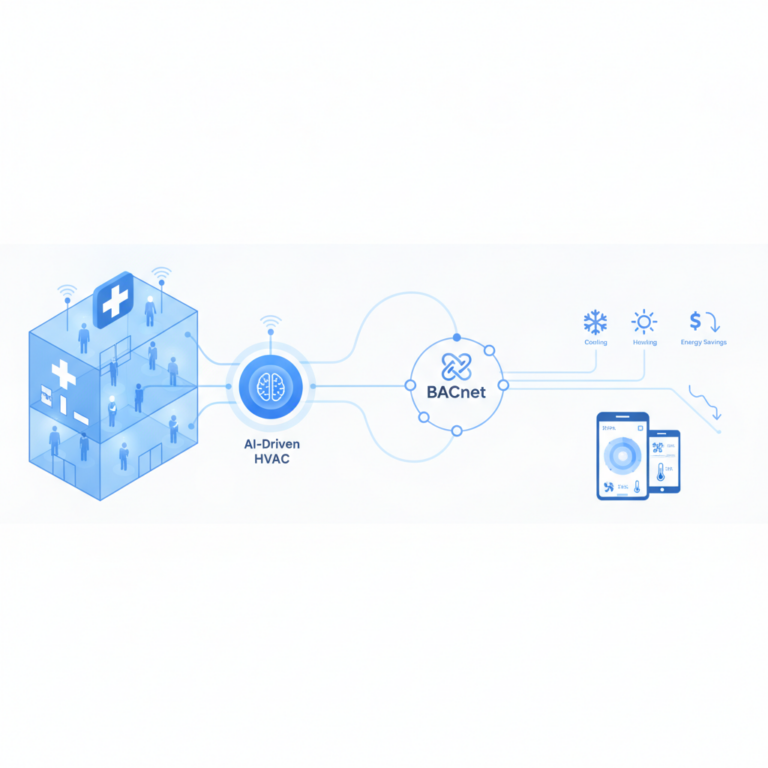
The solution to the BTM energy gap lies in unifying disparate hardware through an adaptive software layer. The integration protocols—Modbus TCP, DNP3, BACnet, and REST APIs—are already standard across modern energy infrastructure. What has been missing is a purpose-built platform that synthesizes this data into automated, predictive action.
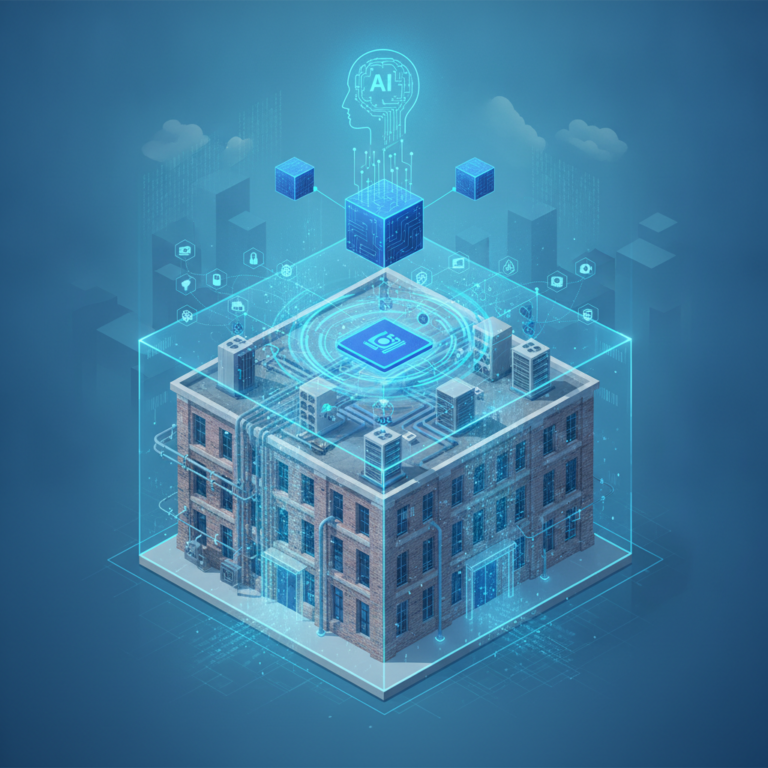
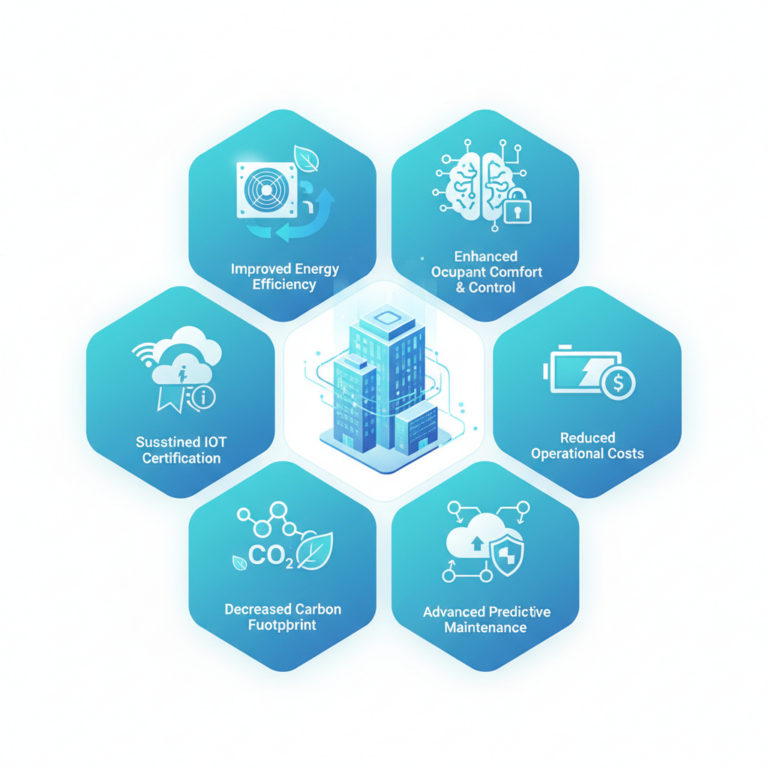
This is where specialized cloud ecosystems like BAaaS.io are reshaping building operations. By providing centralized control and real-time telemetry, the BAaaS platform acts as the missing intelligence layer. It creates an integrated building information sphere that continuously monitors critical infrastructure, forecasting loads and grid spot prices with precision.
Instead of relying on rigid setpoints, operators utilizing BAaaS.io benefit from proactive maintenance and automated environmental adjustments. By seamlessly integrating data across HVAC, BESS, and lighting systems, facilities can dispatch energy optimally before the peak arrives, achieving significant carbon footprint reductions and ensuring uncompromising reliability.
Conclusion
Australia is currently laying down data center infrastructure that will operate for the next 20 to 30 years. The energy management architecture chosen today will dictate the financial and operational viability of these sites for decades. Attempting to manage dynamic, AI-driven power loads with the static control philosophies of the past is a recipe for immense financial waste and compromised reliability.
Operators who integrate an adaptive intelligence layer from day one—rather than attempting costly retrofits down the line—will secure a definitive structural advantage. The BTM energy gap is real and expanding with every GPU rack installed, but with the right automated control strategy, it is entirely solvable.