
Indoor Thermometer and Humidity Meter Market 2026–2032: How Smart Sensing is Redefining Comfort, Compliance, and Energy Efficiency
The indoor thermometer and humidity meter market is undergoing a quiet but significant transformation. Once viewed as a stable, low-tech category, it is now at the center of smart building, IAQ (indoor air quality), and regulatory compliance strategies across residential, commercial, and industrial environments.
According to QYResearch’s latest report, “Indoor Thermometer and Humidity Meter – Global Market Share and Ranking, Overall Sales and Demand Forecast 2026–2032”, the market is set to rise from approximately USD 1.18 billion in 2025 to USD 1.75 billion by 2032, at a 5.8% CAGR. Behind this growth is the convergence of smart homes, ICS and building automation, post-pandemic health awareness, and stricter compliance regimes in pharmaceuticals, cold chain logistics, and archival preservation.
Market Growth: From Simple Gauges to Strategic Sensing Infrastructure
The QYResearch forecast highlights a solid trajectory for indoor thermometer and humidity meter demand, with market value expected to reach USD 1.75 billion by 2032. This growth is not just volume-driven; it reflects a shift from basic, standalone meters toward connected, data-rich sensing systems that integrate into building automation and industrial control environments.
Three structural drivers underpin this expansion. First is smart home adoption: environmental sensors are among the fastest-growing device classes, supporting automated HVAC control, comfort tuning, and energy optimization. Second is heightened health awareness: maintaining 40–60% relative humidity is now recognized as critical for reducing respiratory infection risk and mold growth. Third is compliance: pharmaceutical storage, biomanufacturing, and cold chain logistics all require auditable, accurate monitoring equipment, opening higher-margin opportunities for professional-grade manufacturers.
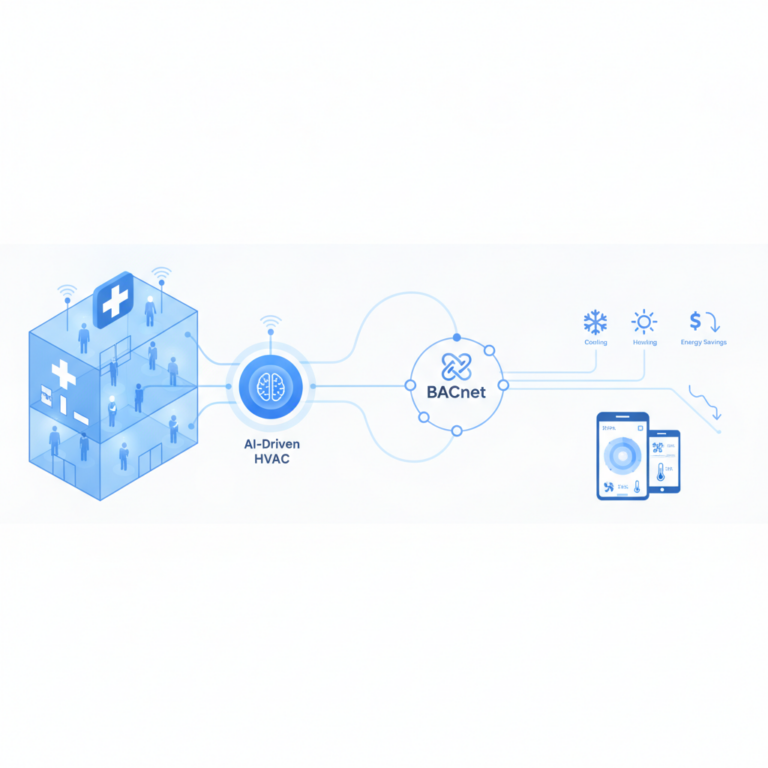
This evolution elevates indoor thermometer and humidity meters from peripheral gadgets to strategic infrastructure nodes. In modern smart buildings, they serve as edge devices feeding BACnet, Modbus, or cloud-native platforms, where analytics, alarms, and optimization logic drive both occupant comfort and energy performance.
Form Factors and Applications: Portable, Benchtop, and Integrated Building Automation
The report segments the market by form factor into portable and benchtop devices, each aligned with distinct operational needs. Portable units—handheld or compact desktop—account for around 62% of unit volume, spanning basic USD 10 consumer gadgets to USD 250–500 professional data loggers. These are favored for spot-checks, maintenance rounds, and ad hoc diagnostics across homes, warehouses, and field service operations.
Benchtop units, meanwhile, are designed for continuous monitoring with AC power, external probes, and digital outputs. They are the workhorses of laboratories, cleanrooms, and quality control labs, where stable, highly accurate data is a non-negotiable requirement. In industrial environments, the line between benchtop monitors and fixed transmitters blurs, especially when 4–20 mA outputs and digital protocols enable tight integration into DDC controllers and building automation systems.
End-use segmentation is equally distinct. Residential use is high-volume and price-sensitive, increasingly dominated by Bluetooth and WiFi devices. Commercial applications—offices, hotels, museums, and schools—focus on HVAC optimization and asset preservation. Industrial environments such as warehouses, pharmaceutical storage, greenhouses, and server rooms demand higher accuracy, calibration certificates, and native connectivity into BAS and SCADA systems. Here, the devices are effectively part of the ICS stack, making cybersecurity and protocol robustness essential design considerations.
Connected Sensing in Homes: From Comfort Gadgets to Data-Driven IAQ Management
In the residential sector, the indoor thermometer and humidity meter has evolved from a simple LCD readout into a smart sensor that underpins data-driven IAQ strategies. Connected devices—often combining temperature, humidity, VOCs, and CO₂—grew from 18% of residential unit sales in 2023 to 37% in 2025, driven by easy smartphone integration and cloud-based historical analytics.
Consumers increasingly expect real-time alerts when humidity crosses comfort or risk thresholds, integrations with smart thermostats, and compatibility with automation ecosystems like Alexa, Google Home, and IFTTT. For device makers, this connectivity adds USD 4–7 to the bill of materials but enables a USD 15–25 price premium and recurring revenue streams via cloud storage and analytics subscriptions.
This shift also changes the role of environmental sensing within smart homes and small offices. Rather than being read occasionally, temperature and humidity data become continuous inputs for automated setpoint optimization, load shifting, and even wellness-focused features such as sleep comfort modes. Smart building SaaS platforms like BAaaS.io can leverage these edge sensors—wherever they are installed—to create a unified, cloud-based view of indoor conditions across residential portfolios or mixed-use properties.
Accuracy Tiers and Compliance: Picking the Right Sensor for the Risk Profile
One of the defining characteristics of this market is accuracy stratification. Consumer-grade devices commonly offer ±1.0°C and ±5–8% RH accuracy—adequate for comfort monitoring but misaligned with the risk and regulatory requirements of pharmaceuticals, food storage, or critical archives. At the top end, professional brands like Testo, Rotronic, and Dwyer deliver ±0.3°C and ±1.5–2% RH with NIST-traceable calibration, at 5–10× the price of consumer models.
A mid-tier segment has emerged in the USD 40–120 range, targeting prosumers and light commercial users with improved accuracy and data-logging capabilities. For facility managers, the key is aligning sensor performance with application risk: over-specifying for simple comfort monitoring burns budget, while under-specifying for regulated spaces introduces compliance risk and potential product loss.
In industrial and pharmaceutical contexts, sensors are part of a validated control chain governed by FDA 21 CFR Part 11 and EU GMP Annex 11. Data integrity, audit trails, and calibration traceability are as important as accuracy. Integrating these sensors into building automation and ICS environments via secure BACnet or Modbus connections—and orchestrating them through platforms like BAaaS.io—allows organizations to centralize compliance evidence, alarms, and maintenance workflows.
Industrial Divergence: Discrete Spot Checks vs. Continuous Validation
The report identifies a critical divergence in industrial usage: discrete spot monitoring versus continuous validation. Spot checks—warehouse temperature rounds, HVAC commissioning, greenhouse inspections—favor rugged portable meters with flexible probe options and instant readings. These devices support maintenance workflows but typically do not form part of a validated control chain.
Continuous validation, by contrast, is the domain of fixed, networked sensors in pharmaceutical stability chambers, cleanrooms, server rooms, and critical warehouses. These installations rely on benchtop or wall-mounted units with 4–20 mA outputs, BACnet or Modbus communications, redundant sensors, and onboard data logging. Growth here is strong—11.2% year-on-year compared with 5.9% for discrete monitoring—because regulations demand automated, tamper-evident environmental records.
For building owners and ICS engineers, continuous validation essentially transforms environmental monitoring into a cyber-physical system. Data must be collected securely, time-synchronized, and integrated into BMS, SCADA, or cloud platforms. Solutions like BAaaS.io can act as the aggregation layer, ingesting field data from BACnet/IP or Modbus devices, enforcing role-based access control, and providing the audit-ready reports regulators expect.
Commercial Buildings, Energy Codes, and BACnet-Enabled Environmental Monitoring
Commercial building codes are another powerful catalyst. Standards such as ASHRAE 90.1-2022 and regulations like California Title 24 (from 2026) increasingly mandate or incentivize zone-level temperature and humidity monitoring for demand-controlled ventilation and energy optimization. This is turning indoor thermometer and humidity meters into core sensing points within modern building automation systems.
In practice, this means distributed sensor networks across office zones, hotel floors, classrooms, and retail areas, feeding into BACnet-based BMS platforms. Facility managers gain granular visibility into thermal comfort, humidity-driven mold risk, and energy performance, while analytics can identify dead zones, overheating equipment rooms, and opportunities for setpoint adjustments.
Cloud-native smart building platforms such as BAaaS.io extend this model further by centralizing telemetry across multi-site portfolios. They provide operators with real-time dashboards, alarm management, and optimization recommendations while abstracting protocol complexity. For energy service companies and system integrators, this creates new value-added services around commissioning, continuous commissioning, and performance contracts backed by hard environmental data.
Battery Life, Wireless Range, and the Practicalities of Large-Scale Deployment
As indoor thermometer and humidity meters become more connected, two practical parameters increasingly determine project success: battery life and wireless range. Consumer surveys and comparative reviews consistently show that short battery life is a top pain point, especially in multi-sensor deployments across homes or small commercial spaces.
Leading WiFi devices now claim 18–24 months of runtime through aggressive sleep modes and batched transmissions, while Bluetooth products often reach 2–3 years. In larger commercial and industrial spaces, wireless range becomes equally critical; sensors must reliably traverse concrete floors, metal shelving, and dense equipment. Products delivering 100–150 feet of reliable indoor range command a competitive advantage.
For building automation architects, these metrics directly influence lifecycle cost models. Each battery change is a truck roll or maintenance task. When sensors are integrated into cloud platforms like BAaaS.io, operators can track battery status fleet-wide, prioritize replacements, and tune reporting intervals for an optimal balance of data granularity and battery longevity.
Museums and Archives: A High-Value Micro-Niche with Unique Constraints
Beyond the classic residential, commercial, and industrial segments, the report highlights a specialized niche: museums, archives, and rare book libraries. These environments require exceptionally stable conditions—often 18–21°C and 45–55% RH—to safeguard fragile materials. Here, the cost of environmental failure is measured in irreversible cultural loss rather than product spoilage.
This segment demands a specific blend of attributes: non-invasive installation (no penetration of historic display cases), discreet aesthetics, wireless connectivity to avoid intrusive cabling, and high accuracy with robust documentation. Annual spend is estimated at USD 45–55 million, but with average selling prices ranging from USD 250 per single-zone monitor to USD 3,500–5,000 for multi-zone wireless networks, margins can reach 55–65%.
For vendors and integrators, this presents a compelling opportunity to offer turnkey solutions that pair specialist sensors with centralized monitoring platforms. A large European archive, for example, replaced manual weekly meter readings with 320 wireless nodes and a central software layer that issued deviation alerts, significantly reducing labor while improving risk management. Cloud platforms like BAaaS.io are well-suited to such deployments, correlating environmental data with preservation policies and maintenance workflows across multiple institutions or campuses.
Technical Challenges: Humidity Drift, Response Time, and System Design Implications
Despite innovation, the market faces persistent technical challenges that buyers and designers must understand. The first is humidity sensor drift: capacitive sensors, which dominate the category, gradually lose accuracy due to contamination and exposure to condensation. Professional instruments mitigate this with field calibration options or recommended annual factory recalibration; most consumer products do not, resulting in significant accuracy degradation within 12–24 months.
The second is the response time versus stability trade-off. Fast sensors (10–30 seconds to 90% of final reading) capture transient events but can exhibit higher noise, while slower sensors (60–120 seconds) smooth out variations but risk missing short-lived excursions. The right choice depends on application dynamics—rapid door openings in cold rooms versus slow drift in archive storage, for example.
From a building automation and ICS perspective, these factors influence more than just device specification. They affect alarm thresholds, control loop tuning, and data analytics. Platforms like BAaaS.io can compensate algorithmically for known sensor behavior, apply drift monitoring via cross-zonal comparison, and schedule calibration interventions based on observed divergence—all of which enhance long-term reliability of environmental data.
Strategic Recommendations for Facility Managers, Product Teams, and Investors
For facility managers and building owners, the report’s analysis reinforces a simple principle: one sensor per building is not enough. Temperature stratification and humidity microclimates are normal, especially in large or complex structures. Deploying zoned networks of indoor thermometers and humidity meters, integrated into BACnet-based BMS or cloud platforms like BAaaS.io, enables smarter setpoint strategies, early detection of moisture issues, and documented compliance for regulated spaces.
For sensor manufacturers and product managers, success depends on clear segmentation and disciplined feature design. Consumer products should prioritize connectivity, UX, and battery life. Professional and industrial devices must emphasize accuracy, calibration traceability, and secure protocol support. The museum and archive niche warrants specialized product lines with tailored aesthetics and documentation, where competition is modest and margins are attractive.
For investors, the key signals to watch are connected device penetration rates and the growth of continuous validation solutions in pharma, cold chain, and mission-critical facilities. Vendors that pair high-accuracy hardware with calibration services and software platforms—whether in-house or via ecosystems like BAaaS.io—are best positioned to defend margins against low-cost, undifferentiated competition.
Conclusion
The indoor thermometer and humidity meter market is transitioning from a commodity category to a strategic cornerstone of smart buildings, ICS security, and regulatory compliance. Growth to USD 1.75 billion by 2032 is underpinned by smart home adoption, health-focused IAQ awareness, tightening energy codes, and stringent requirements in pharmaceuticals, cold chain, and cultural preservation.
For stakeholders across the value chain, the implications are clear. Sensors are no longer standalone gadgets; they are edge devices in a larger cyber-physical architecture spanning BACnet networks, industrial control systems, and cloud platforms. Organizations that treat environmental sensing as an integrated system—combining the right accuracy tier, robust communications, calibration strategy, and centralized management via platforms such as BAaaS.io—will unlock not just compliance, but measurable gains in energy efficiency, asset protection, and occupant well-being.