Future-Proofing Smart Buildings: Integrating Legacy BACnet Systems with Modern IoT
System integrators today face a monumental challenge in the commercial real estate sector: modernizing building automation without ripping out the expensive, embedded infrastructure already in place. Thousands of facilities globally still rely on legacy BACnet, Modbus, or LON networks, which were engineered for localized control rather than cloud-based analytics.
Bridging these isolated operational technology (OT) networks with modern IT environments is essential for improving energy performance, enhancing occupant comfort, and deploying advanced AI applications. EnOcean’s SmartServer IoT has emerged as a critical solution to this problem, offering an open, multi-protocol edge platform that connects legacy systems with modern analytics seamlessly and securely.
The Challenge of Legacy Silos in Building Automation
Historically, building management systems (BMS) operated in heavily siloed, proprietary environments. Extracting real-time telemetry from these legacy controllers to feed modern platforms typically required custom middleware, complex engineering, and a high tolerance for system downtime.
Furthermore, exposing legacy Industrial Control Systems (ICS) directly to external networks introduces significant ICS security risks if not engineered correctly. Integrators need architectures that can safely deliver data to modern IT applications without compromising the fundamental control logic or security posture of the facility.
Unifying Multi-Protocol Ecosystems at the Edge
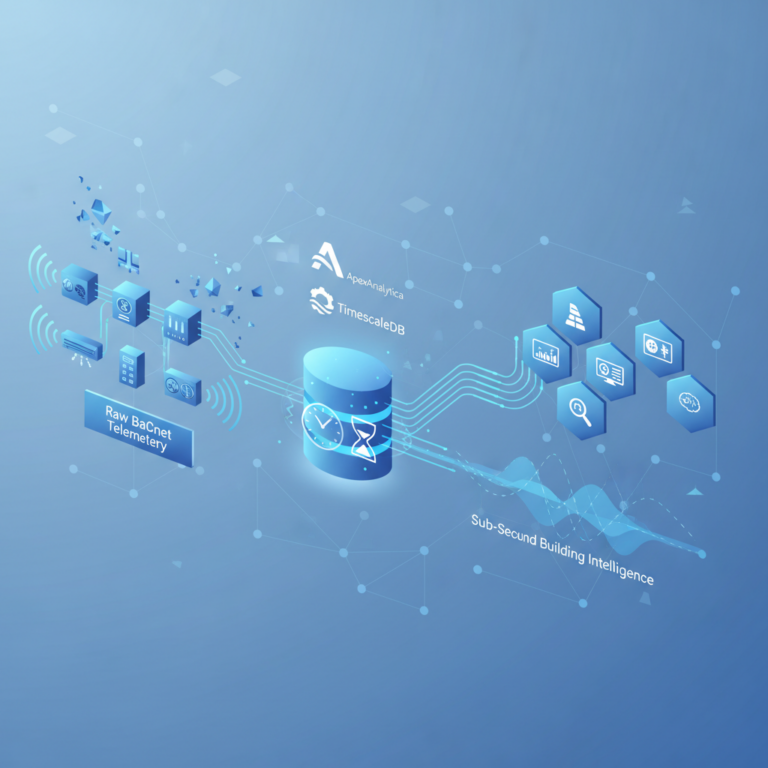
SmartServer IoT acts as a secure, universal translator for smart buildings. By supporting BACnet, Modbus, and LON on the OT side, and MQTT, REST, and OPC UA on the IT side, it unifies device communication across varying technologies. This eliminates the need for expensive, vendor-specific gateways.
Crucially, the platform utilizes a hybrid edge-cloud architecture. This ensures that even if internet connectivity drops, the building’s core automation and logic continue to function locally. This edge processing capability is fundamental for maintaining operational reliability and life-safety compliance in modern commercial real estate.
Semantic Tagging: The Unsung Hero of Data Analytics
Pulling raw data from a legacy sensor is only half the battle; understanding what that data represents is where true operational value is generated. SmartServer IoT incorporates semantic tagging to structure and standardize disparate data points, such as VAV temperature readings or chiller control states.
This standardized tagging allows AI energy optimization tools and predictive maintenance algorithms to automatically ingest and interpret information across systems. It effectively future-proofs the building’s data architecture, ensuring a consistent taxonomy as new sensors and analytic tools are integrated over time.
BACnet Certification Ensures Reliable Interoperability
In the world of building automation, interoperability guarantees are paramount. SmartServer IoT’s certification by BACnet International is a critical validation of its strict compliance with global control standards. This certification provides engineers with the confidence that deploying the edge device won’t disrupt existing BACnet-compliant networks.
By prioritizing open standards, this approach helps facility managers avoid costly vendor lock-in. It ensures long-term compatibility with future technologies, making it a highly stable foundation for phased building modernization projects.
Elevating Edge Data with Cloud-Based Ecosystems
While bridging legacy hardware to modern protocols at the edge is a vital first step, translating that data into tangible operational savings requires a powerful cloud platform. Once data is liberated by edge gateways, it must be aggregated, analyzed, and acted upon holistically.
This is where specialized platforms like BAaaS.io provide a massive operational advantage. By ingesting unified data streams from edge gateways, BAaaS.io creates a centralized control hub for managing property-wide infrastructure. Operators can leverage this real-time telemetry to execute automated environmental adjustments, implement robust role-based access control, and proactively schedule maintenance before critical breakdowns occur.
Conclusion
The transition toward data-driven, connected operations does not have to require a massive capital expenditure to overhaul existing infrastructure. Technologies that embrace multi-protocol edge processing prove that legacy systems can actively and securely participate in the next generation of smart building automation.
By coupling certified, interoperable edge hardware with advanced cloud ecosystems like BAaaS.io, system integrators can deliver highly scalable, intelligent environments. This hybrid strategy drives sustainability, reduces integration costs, and significantly improves the tenant experience—all without disrupting daily operations.